Tanya Sara George Introduction “I disapprove of what you say, but will defend to the death your right to say it.” -Evelyn Beatrice Hall As vehemently argued by John Stuart Mill, the freedom of speech and expression are the only central facilitators for the search for truth and knowledge. This freedom is an integral facet... Continue Reading →
Can States conduct a census? A Critique of the Patna HC’s Order on the State’s Legislative Competence
This piece examines the Patna High Court decision in Youth for Equality v. State of Bihar. It argues against the Court's pronouncement of the Bihar state's legislature's competence to carry out a census and challenges the the manner in which the Court arrived at its decision.
Doctrine of Manifest Arbitrariness: Moving Towards A Wider ‘Reasonableness’ Review [Part II]
This blog analyses the characterizstion of arbitrariness as an enemy to equality, contending that while the Classification Doctrine and the older Non-Arbitrariness Doctrine both operate primarily as formal, process-based rationality requirements, focused on the means-end connection, the Manifest Arbitrariness Doctrine introduces a more normative, effects-based evaluation of both ends and means.
Doctrine of Manifest Arbitrariness: Moving Towards A Wider ‘Reasonableness’ Review [Part I]
This blog analyses the characterizstion of arbitrariness as an enemy to equality, contending that while the Classification Doctrine and the older Non-Arbitrariness Doctrine both operate primarily as formal, process-based rationality requirements, focused on the means-end connection, the Manifest Arbitrariness Doctrine introduces a more normative, effects-based evaluation of both ends and means.
Is the Constituent Assembly Still Supreme? Revisiting the Bar of Article 329
The Constituent Assembly encapsulated the separation of power in numerous provisions to prevent the eclipse of liberties of the citizens. In this architecture, certain provisions like Article 329 stand as near-impenetrable walls, barring judicial scrutiny of electoral and delimitation matters. These provisions which once vanguard the liberties of citizens, now safeguards potential arbitrariness from challenge. The author interrogates this constitutional paradox and navigates the tension between reverence for founding texts and the evolving demands of constitutional morality.
Unpacking the Generic Drug Prescription Debate: Public Interest or Constitutional Overreach?
The Supreme Court recently mulled a mandate to prescribe generic medicines. This Article examines the constitutional validity of such a mandate, highlighting the effect of this law on the public considering the current infrastructure. Ultimately, it calls for a more nuanced approach in balancing the Directive Principles of State Policies and the Fundamental Rights.
Case Commentary on RIT Foundation v. Union Of India: About Intervention And Interference
The institution of marriage and the acts committed between a husband and a wife witnesses a dilution of the public-private divide. The article focuses on the offence of marital rape in the light of such divide by analysing the split verdict the Delhi High Court delivered in the case of RIT Foundation v. Union of India.
‘Hard Look Review’ and Data Privacy – Providing an alternative to the Proportionality Test
Proportionality test has been used quite often in Indian constitutional law jurisprudence. In the absence of a clearly defined rule or standard, courts resort to proportionality standards, that is, balancing individual interests against broader public or state interests. This article will argue that while proportionality has been the dominant lens through which courts evaluate data privacy infringements, procedural doctrines like the hard look review can serve as a complement to proportionality tests.
Let Them Be Children: Religion, Coercion, and the Constitutional Duty to Protect Childhood
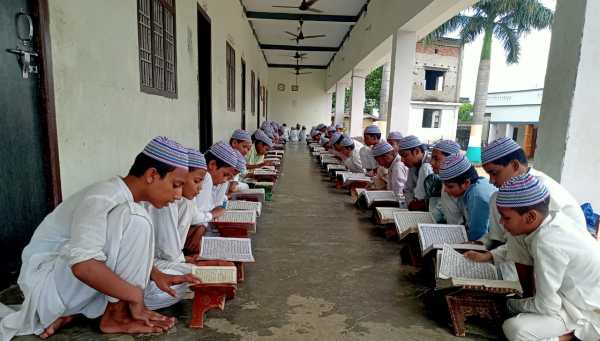
The article explores how children in India are often subjected to religious coercion—both at home and in educational settings—under the guise of cultural or parental authority. Through constitutional provisions, case law, and international conventions like the UNCRC, the piece argues for a more robust legal and policy framework to uphold children's rights to autonomy, dignity, and cognitive development. It delves into issues such as Bal Diksha, the quality of education in religious institutions like madrasas and gurukuls, and the urgent need for the State to fulfil its parens patriae role. The piece also makes forward-looking recommendations to ensure that religious freedom does not come at the cost of children’s welfare.
Reconceptualising Data Theft as a Violation of Property Rights under Article 300A
This article reconceptualises data as constitutional property under Article 300A and advocates for its protection against unauthorised access. It examines Indian and comparative jurisprudence, critiques existing legal frameworks, and calls for legislative reform to treat data theft as property crime, aligning India’s digital rights regime with evolving global standards.
Tussle of Equality in National Awards
The Supreme Court in Balaji Raghavan upheld National Awards’ validity, ruling they aren’t “titles” under Article 18(1). However, applying the proportionality test reveals flaws – opaque selection risks bias, undermining equality. Reforms for transparency and inclusivity are needed to align awards with the Constitution’s egalitarian ethos.
Deciphering Sub-Categorisation in Scheduled Castes: Redefining Equity or Reinforcing Division?
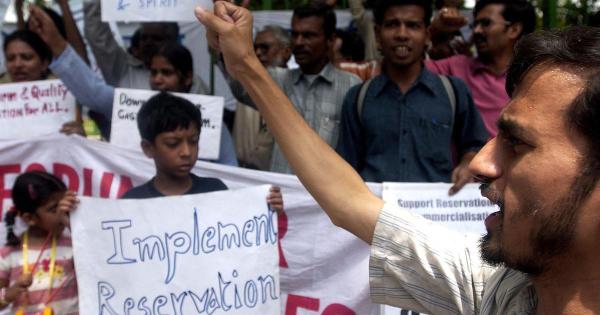
This blog critically examines the sub-categorisation of Scheduled Castes in India, highlighting its role in redefining equity and ensuring fairer distribution of affirmative action benefits. While it promises to empower the most marginalised, it also raises concerns about reinforcing caste divisions and political motivations behind such policy shifts.